

When did the topic of data become a major concern for policy makers in the European Union, and what prompted this?
Big data emerged as a major policy topic around 2012–2013. The European Commission quickly recognized the strategic importance of data for Europe’s economy and competitiveness, leading to the launch of the Big Data Value Public-Private Partnership (BDV PPP) in 2014, with a € 2.5 billion investment programme that became operational in 2015. BDVA was established as the private-sector counterpart to the European Commission within this initiative.
This effort was further strengthened by the European Data Strategy in 2020, which introduced the concept of European Common Data Spaces to overcome data silos, together with key data-related regulation such as the GDPR, the Data Governance Act and the Data Act. More recently, the 2025 European Data Union strategy has updated this framework with a stronger focus on data for AI and an international perspective.
Why was BDVA created and what is its mission?
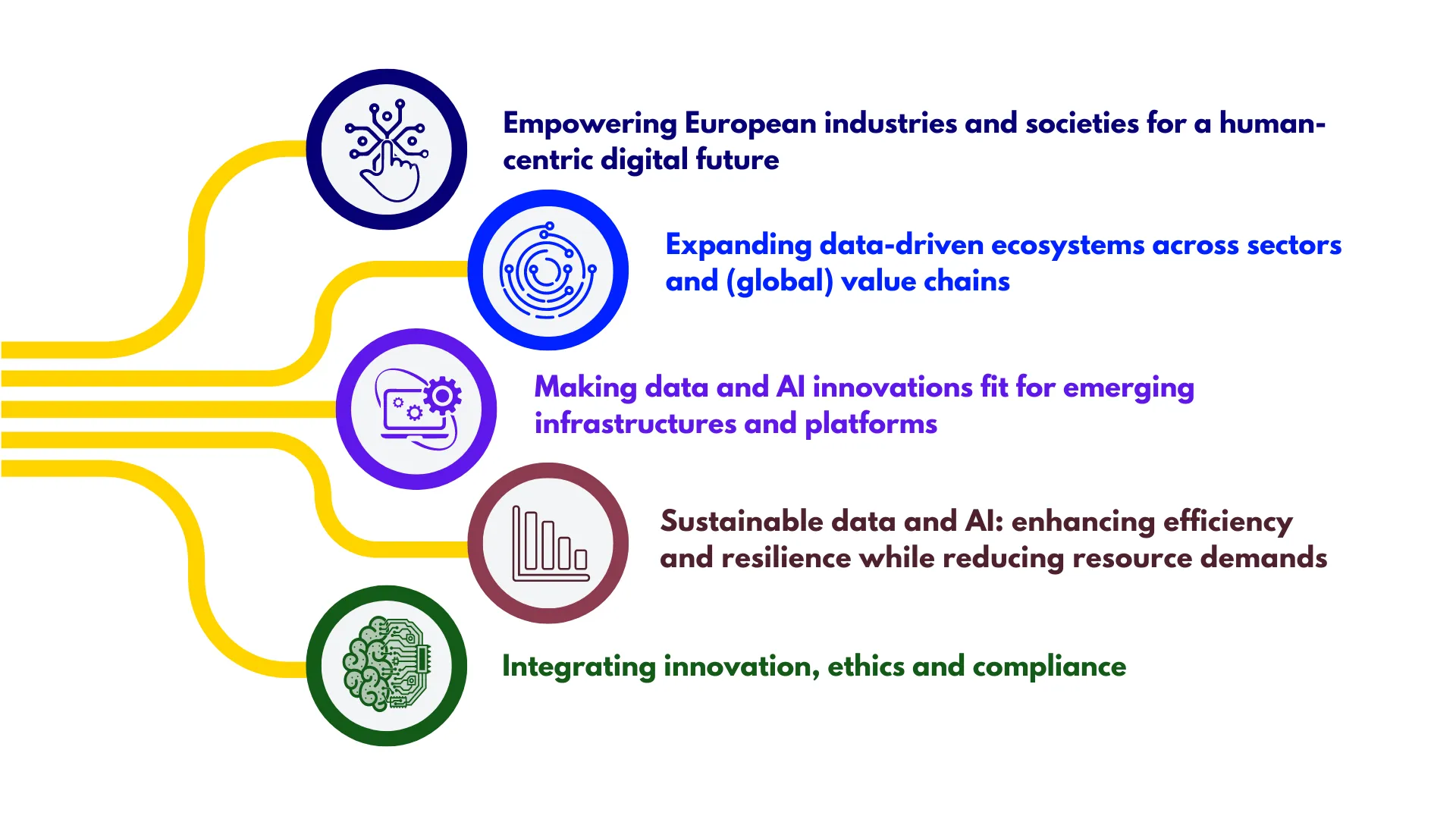
BDVA was founded in 2014 as the private counterpart to the European Commission for the BDV PPP. During the 2014–2020 period, it acted as the umbrella organization for European projects and initiatives focused on data innovation. Today, BDVA brings together a broad European ecosystem of industry, research organizations, small and medium enterprises (SMEs), and public-sector stakeholders working on data and AI. Its mission is to foster data-driven innovation in Europe by developing strategic research and innovation agendas, supporting collaboration across sectors, and providing guidance to policymakers and industry. BDVA also serves as a forum for knowledge sharing and discussion on topics related to data, AI and digital transformation at the European level.
What are BDVA’s main areas of activity?
Over the 10 years since it was established, BDVA has evolved to become the centre of a vibrant ecosystem, with more than 250 members all around Europe. BDVA itself is a member of various European-level initiatives, including ADRA (the AI, Data and Robotics Association), EuroHPC JU (representing the perspective of AI and data, and requirements from industry) and the Computing Continuum initiative coordinated by HiPEAC (which includes around 15 associations).
With data and AI at the core of its activities, BDVA has been involved in the establishment of European Data Spaces from the very beginning, with relevant publications in the field on key topics such as metadata interoperability, data quality, privacy-enhancing technologies (PETs) and generative AI and data spaces. As part of its events, Data Week and the European Big Data Value Forum, BDVA is also leading discussions on new topics like the synthetic generation of data, data-driven compliance, AI-driven data products, and exploring new approaches to semantic interoperability.
A key focus of BDVA is creating value out of data, data sharing and data spaces. To that end, BDVA was a partner of the first phase of the Data Spaces Support Centre (DSSC) where it led the pillar on value creation and played an active role in the business, co-creation and design principles aspects, and is also a partner in the second phase, which recently started.
BDVA is also working to facilitate the establishment of AI Factories in Europe (leveraging its connection with the EuroHPC, the fact that most of the AI Factories hosting entities are BDVA members, and the knowledge of the community around the convergence between HPC, data and AI), and is also supporting the creation of Data Labs. Finally, on the standardization front, BDVA is liaising with CEN CENELEC JTC21 and JTC25, and is leading a standard on collaborative data quality.
 European Big Data Value Forum 2025 - Photo: © BDVA
What are priority areas for data in Europe? What are some of the challenges which we need to overcome?
In my opinion, one of the major challenges in Europe regarding data is still the availability of (and access to) the vast amount of high-quality industrial data we need to train large AI models. Potential industrial data providers remain reluctant to share data, either because they do not know they can do so, or because of a lack of trust, or because they don’t see the value of sharing their data.
Data Spaces are trying to solve this challenge in different sectors, and the new AI Data Labs have been conceived exactly to address this challenge for AI ecosystems (for now in AI Factories), but we are not yet at that point. Ultimately, the underlying challenge is not only technological, but also about value creation. Europe must move beyond a purely technology-driven approach and ensure that data and AI generate clear economic, societal and strategic value, while also strengthening European sovereignty and competitiveness.
What are the major trends you've seen in this area over the last few years?
Several important trends have shaped the data landscape in recent years, including advanced data analytics, the emergence of the data continuum, and new data architecture paradigms such as serverless computing, data virtualization and data lakehouses. These modern approaches overcome the limitations of traditional systems, particularly when dealing with the challenges of today’s data landscape: vast data volumes, unstructured and multimodal formats, the growing need for real-time processing and demands for scalability and flexibility.
One particularly important trend (related to the challenge of availability of high-quality data) is the growing interest in the generation of synthetic data. Synthetic data can help address the scarcity of high-quality datasets and reduce barriers linked to personal or sensitive data. At the same time, it also introduces new challenges related to quality, trustworthiness, governance and validation. Another trend which has had a major impact on BDVA’s work is the rise of AI. With data still at the core of EU innovation, we are increasingly seeing a symbiotic relationship between AI and data: AI technologies can improve data management in multiple ways, while processes have to be reviewed and redesigned to prepare data for the specific requirements for AI AI (in this paper, we propose a framework to assess the AI readiness of different aspects of data products
In which major areas will BDVA be active in the future? Where do you think Europe could make major wins thanks to strategic data management?
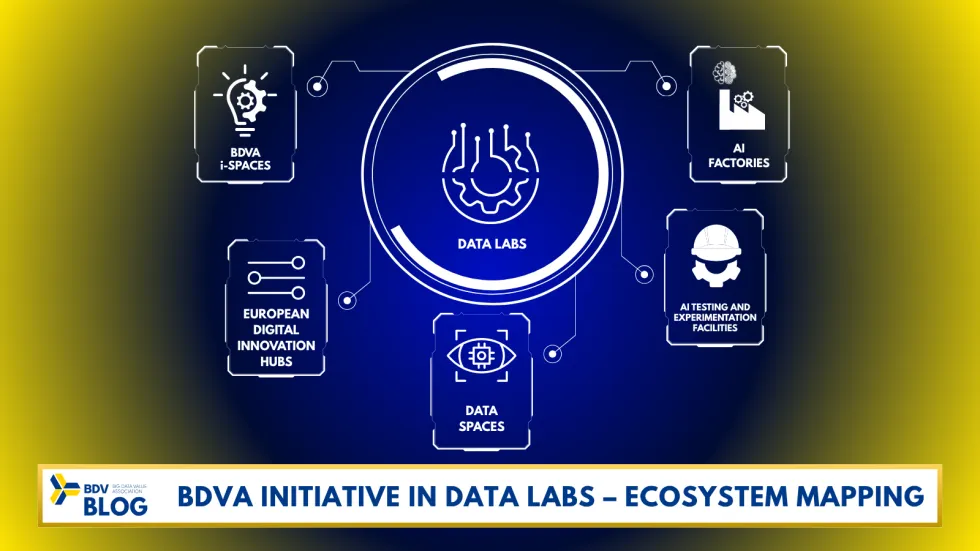
BDVA is increasingly focused on the concept of industrial AI. This approach combines data, AI and business value within a single framework to deliver tangible benefits for European industry. The objective is not only to develop advanced AI technologies, but also to ensure they create measurable value and support Europe’s industrial competitiveness. A key aspect of this vision is the convergence of different European initiatives and instruments, including AI Factories, Data Spaces, AI Testing and Experimentation Facilities (AI TEFs), Data Labs and European Digital Innovation Hubs (EDIHs). Bringing these elements together can improve the efficiency, reliability and adoption of AI across European industry, while also facilitating access to high-quality industrial data.
Finally, this framework also includes some of the most prominent emerging topics in AI, such as agentic AI and physical AI, which are already being actively discussed within BDVA. Through some of our industrial members, we are involved in the IPCEI-AI project, aimed at building a sovereign AI ecosystem for European industries. We think that this initiative is fully needed and will have a strong impact on the European industrial ecosystem and the way AI is developed, deployed and adopted across industry.